
As opera continues to evolve in response to cultural, technological, and societal shifts, BLO remains at the forefront, reimagining classic repertoire, integrating bold contemporary works, and making opera more accessible to everyone in our community. We love opera for where it’s been and where it’s going.
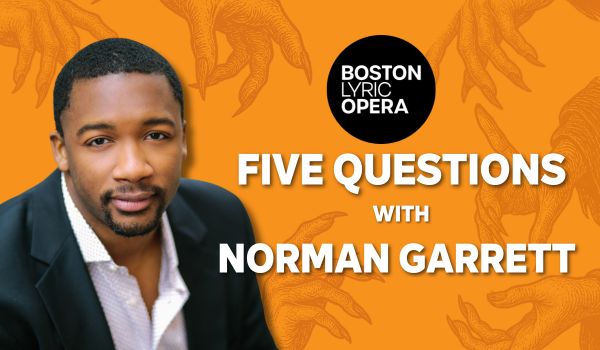
We’re just over one week away from opening our 2025/26 season with Verdi’s iconic masterpiece, Macbeth. Look forward to gorgeous orchestral music, thrilling choruses, and powerhouse performances from soprano Alexandra LoBianco, tenor David Junghoon Kim, bass Zaikuan Song, and baritone Norman Garrett as Macbeth.
About Norman Garrett
Garrett makes his BLO debut with this production, but he’s no stranger to the role of Macbeth. Called “scene-stealing” by The New York Times, Garrett is equally at home in classic and contemporary operatic repertoire. His 2025/26 season will see him returning to The Metropolitan Opera to perform Jim in Porgy and Bess, performing the same role with the Lyric Opera of Kansas City, and in concert, Carmina Burana with Boise Philharmonic and The Epic of Gilgamesh with Bard SummerScape. Recently, Garrett returned to Washington National Opera as Crown in Porgy and Bess, sang The Reverend in Blue with the Lyric Opera of Chicago, debuted at San Francisco Opera singing Abdul and Abe in Omar, returned to LA Opera as Bob in William Grant Still’s Highway 1, USA, performed Masetto in Don Giovanni with Houston Grand Opera, sang Jochanaan in Salome with Des Moines Metro Opera, and debuted as Macbeth with Opera Orlando. Concert appearances included Carmina Burana with Orchestra of St. Luke’s at Carnegie Hall, Beethoven’s Symphony No. 9 with the Phoenix Symphony, and selections from Fire Shut Up in my Bones with composer Terence Blanchard at Purdue University and the Krannert Center in Urbana, Illinois.
This month, we sat down with Garrett to hear about his vision for the future of opera, what draws him to this art form, and why audiences are going to love Macbeth.
What was your first opera?
The first opera I ever heard was Don Giovanni, my freshman year at Texas Tech University. I was in the small chorus.
What is your favorite opera to sing?
So far, my favorite opera to sing is a toss-up between the title roles Verdi’s Macbeth and the obscure Le roi Arthus by Chausson.
What is your vision for the future of opera?
This question is interesting. As far as my vision of the future of opera is concerned, it’s already happening. I anticipated years ago that productions would become more interactive. Fourth wall breaking, visceral, genre-bending, more brutal and more compact scores. That’s from the audience perspective.
As a performer, the future is happening now with companies introducing new jobs to help facilitate the process of production. Intimacy directors have been my favorite addition so far. The idea of someone being in the space to allow people to maintain certain personal boundaries physically or emotionally fills a gaping hole in the rehearsal workspace. The future is already here. I could say a lot more about this, but I’d rather have a conversation about it all.
What do you love most about being an opera singer?
I’m interested in the psychological aspects. The idea of being someone else. Thinking like them. Knowing their past, their traumas, their victories, their skeletons. Depending on the size of the role, there’s endless discovery that one can do. I also love how all of that can and will naturally change and color how a performer sings and articulates their musical phrasing.
Why should audiences come to Macbeth?
The story is TIMELESS. It has parallels with current affairs. Power, ambition, betrayal, love, murder. Now add Verdi’s musical soundscapes to that. It has all the components in spades to compel an audience. I feel Macbeth is such a strong piece. I even believe in the argument that it’s his best operatic work. The Shakespearean story combined with Verdi’s musical fingerprint raises the level of validity as one of Verdi’s greatest triumphs! I also love the possibility that since it’s Shakespeare, the interested audience may be larger. It should get some fresh blood in the audience, especially in the Boston area where theatre arts of many mediums seem quite intertwined and successful.