
As opera continues to evolve in response to cultural, technological, and societal shifts, BLO remains at the forefront, reimagining classic repertoire, integrating bold contemporary works, and making opera more accessible to everyone in our community. We love opera for where it’s been and where it’s going.
We’re looking ahead to She Was There, a two-day event that brings together film, music, and dialogue to illuminate the often-overlooked stories of Black revolutionary women throughout history. Featuring a film screening curated by Roxbury International Film Festival, performances by BLO and Castle of Our Skins, and more at the West End Museum and Museum of African American History, this program asks: Whose stories have we remembered? Whose have we overlooked? And how do we honor the women whose presence changed history?
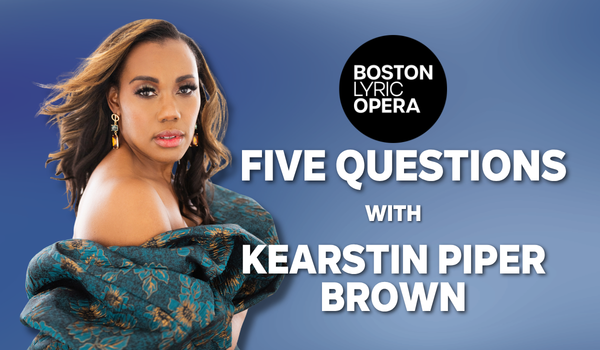
This month, we sat down with soprano Kearstin Piper Brown to hear about her vision and experiences as a musician, and why audiences should check out She Was There.
About Kearstin Piper Brown
Award-winning American soprano Kearstin Piper Brown graces leading opera and concert stages worldwide with her distinctive artistry and radiant presence. This season, she returned to The Metropolitan Opera covering Bess in Porgy and Bess and made her Utah Opera debut as Wendy Torrance in The Shining. Engagements also include Bach Vespers at Holy Trinity, Handel’s Messiah at the Abyssinian Baptist Church, performances of Porgy and Bess with Dayton Opera and Gulfshore Opera, a debut with the Tulsa Symphony Orchestra, and Poppea in The Comet/Poppea. Recent highlights include Alice Ford in Falstaff, Mimì in La bohème, and Poppea at Lincoln Center with the American Modern Opera Company. She received the 2022 World Theatre Award and multiple nominations for Intimate Apparel, later broadcast on PBS Great Performances. Ms. Brown has appeared at Carnegie Hall and with major orchestras across the United States and Europe, and is recognized for her work in both contemporary opera and standard repertoire.
- What was one of your first formative experiences as a musician?
One of my earliest formative experiences as a musician was earning the lead role of Dorothy as a sixth grader in The Wizard of Oz. I enjoyed feeding lines to my nervous classmates onstage and learning how to faint without actually blacking out!
- What made you want to be a singer?
Learning of my college voice professor’s disappointment when I decided to venture out and study musicology after my undergraduate studies made me want to consider a career as a singer. She believed in my talent and work ethic, which motivated me to try something very difficult – becoming an opera singer.
- How do the themes of this concert resonate with you as a Black vocalist?
The themes of this concert resonate with me deeply as a Black woman vocalist. I am a storyteller at the end of the day. This concert theme is the perfect platform from which I can embody the text and the intentions of the artists who created these beautiful works. It feels like home.
- What is your vision for the future of Western classical music?
My vision for classical music is that it would reflect all people. Classical music doesn’t belong to any one race, continent, or class. Classical music should be accessible to those who choose to create and to those who wish to experience it as listeners.
- Why should audiences come to She Was There?
Audiences should come to She Was There because this concert is for them to experience something unique and transformative. It’s not just another pretty concert. It’s a culmination of stories and perspectives that are very necessary for folks to hear at times like now. They will leave feeling affirmed and enlightened, with a heavy dose of inspiration – and, of course, thoroughly entertained.